
The story of the Christmas Truce of World War I, told here in the form of a letter from a brother to his sister:
Christmas Day, 1914
My dear sister Janet,
It is 2:00 in the morning and most of our men are asleep in their dugouts—yet I could not sleep myself before writing to you of the wonderful events of Christmas Eve. In truth, what happened seems almost like a fairy tale, and if I hadn’t been through it myself, I would scarce believe it. Just imagine: While you and the family sang carols before the fire there in London, I did the same with enemy soldiers here on the battlefields of France!
As I wrote before, there has been little serious fighting of late. The first battles of the war left so many dead that both sides have held back until replacements could come from home. So we have mostly stayed in our trenches and waited.
But what a terrible waiting it has been! Knowing that any moment an artillery shell might land and explode beside us in the trench, killing or maiming several men. And in daylight not daring to lift our heads above ground, for fear of a sniper’s bullet.
And the rain—it has fallen almost daily. Of course, it collects right in our trenches, where we must bail it out with pots and pans. And with the rain has come mud—a good foot or more deep. It splatters and cakes everything, and constantly sucks at our boots. One new recruit got his feet stuck in it, and then his hands too when he tried to get out—just like in that American story of the tar baby!
Through all this, we couldn’t help feeling curious about the German soldiers across the way. After all, they faced the same dangers we did, and slogged about in the same muck. What’s more, their first trench was only 50 yards from ours. Between us lay No Man’s Land, bordered on both sides by barbed wire—yet they were close enough we sometimes heard their voices.
Of course, we hated them when they killed our friends. But other times, we joked about them and almost felt we had something in common. And now it seems they felt the same.
Just yesterday morning—Christmas Eve Day—we had our first good freeze. Cold as we were, we welcomed it, because at least the mud froze solid. Everything was tinged white with frost, while a bright sun shone over all. Perfect Christmas weather.
During the day, there was little shelling or rifle fire from either side. And as darkness fell on our Christmas Eve, the shooting stopped entirely. Our first complete silence in months! We hoped it might promise a peaceful holiday, but we didn’t count on it. We’d been told the Germans might attack and try to catch us off guard.
I went to the dugout to rest, and lying on my cot, I must have drifted asleep. All at once my friend John was shaking me awake, saying, “Come and see! See what the Germans are doing!” I grabbed my rifle, stumbled out into the trench, and stuck my head cautiously above the sandbags.
I never hope to see a stranger and more lovely sight. Clusters of tiny lights were shining all along the German line, left and right as far as the eye could see.
“What is it?” I asked in bewilderment, and John answered, “Christmas trees!”
And so it was. The Germans had placed Christmas trees in front of their trenches, lit by candle or lantern like beacons of good will.
And then we heard their voices raised in song.
Stille nacht, heilige nacht . . . .
This carol may not yet be familiar to us in Britain, but John knew it and translated: “Silent night, holy night.” I’ve never heard one lovelier—or more meaningful, in that quiet, clear night, its dark softened by a first-quarter moon.
When the song finished, the men in our trenches applauded. Yes, British soldiers applauding Germans! Then one of our own men started singing, and we all joined in.
The first Nowell, the angel did say . . . .
In truth, we sounded not nearly as good as the Germans, with their fine harmonies. But they responded with enthusiastic applause of their own and then began another.
O Tannenbaum, O Tannenbaum . . . .
Then we replied.
O come all ye faithful . . . .
But this time they joined in, singing the same words in Latin.
Adeste fideles . . . .
British and German harmonizing across No Man’s Land! I would have thought nothing could be more amazing—but what came next was more so.
“English, come over!” we heard one of them shout. “You no shoot, we no shoot.”
There in the trenches, we looked at each other in bewilderment. Then one of us shouted jokingly, “You come over here.”
To our astonishment, we saw two figures rise from the trench, climb over their barbed wire, and advance unprotected across No Man’s Land. One of them called, “Send officer to talk.”
I saw one of our men lift his rifle to the ready, and no doubt others did the same—but our captain called out, “Hold your fire.” Then he climbed out and went to meet the Germans halfway. We heard them talking, and a few minutes later, the captain came back with a German cigar in his mouth!
“We’ve agreed there will be no shooting before midnight tomorrow,” he announced. “But sentries are to remain on duty, and the rest of you, stay alert.”
Across the way, we could make out groups of two or three men starting out of trenches and coming toward us. Then some of us were climbing out too, and in minutes more, there we were in No Man’s Land, over a hundred soldiers and officers of each side, shaking hands with men we’d been trying to kill just hours earlier!
Before long a bonfire was built, and around it we mingled—British khaki and German grey. I must say, the Germans were the better dressed, with fresh uniforms for the holiday.
Only a couple of our men knew German, but more of the Germans knew English. I asked one of them why that was.
“Because many have worked in England!” he said. “Before all this, I was a waiter at the Hotel Cecil. Perhaps I waited on your table!”
“Perhaps you did!” I said, laughing.
He told me he had a girlfriend in London and that the war had interrupted their plans for marriage. I told him, “Don’t worry. We’ll have you beat by Easter, then you can come back and marry the girl.”
He laughed at that. Then he asked if I’d send her a postcard he’d give me later, and I promised I would.
Another German had been a porter at Victoria Station. He showed me a picture of his family back in Munich. His eldest sister was so lovely, I said I should like to meet her someday. He beamed and said he would like that very much and gave me his family’s address.
Even those who could not converse could still exchange gifts—our cigarettes for their cigars, our tea for their coffee, our corned beef for their sausage. Badges and buttons from uniforms changed owners, and one of our lads walked off with the infamous spiked helmet! I myself traded a jackknife for a leather equipment belt—a fine souvenir to show when I get home.
Newspapers too changed hands, and the Germans howled with laughter at ours. They assured us that France was finished and Russia nearly beaten too. We told them that was nonsense, and one of them said, “Well, you believe your newspapers and we’ll believe ours.”
Clearly they are lied to—yet after meeting these men, I wonder how truthful our own newspapers have been. These are not the “savage barbarians” we’ve read so much about. They are men with homes and families, hopes and fears, principles and, yes, love of country. In other words, men like ourselves. Why are we led to believe otherwise?
As it grew late, a few more songs were traded around the fire, and then all joined in for—I am not lying to you—“Auld Lang Syne.” Then we parted with promises to meet again tomorrow, and even some talk of a football match.
I was just starting back to the trenches when an older German clutched my arm. “My God,” he said, “why cannot we have peace and all go home?”
I told him gently, “That you must ask your emperor.”
He looked at me then, searchingly. “Perhaps, my friend. But also we must ask our hearts.”
And so, dear sister, tell me, has there ever been such a Christmas Eve in all history? And what does it all mean, this impossible befriending of enemies?
For the fighting here, of course, it means regrettably little. Decent fellows those soldiers may be, but they follow orders and we do the same. Besides, we are here to stop their army and send it home, and never could we shirk that duty.
Still, one cannot help imagine what would happen if the spirit shown here were caught by the nations of the world. Of course, disputes must always arise. But what if our leaders were to offer well wishes in place of warnings? Songs in place of slurs? Presents in place of reprisals? Would not all war end at once?
All nations say they want peace. Yet on this Christmas morning, I wonder if we want it quite enough.
Your loving brother,Tom
-from "The Christmas Truce" by Aaron Shepard
|
12/23/12
Silent Night: The Christmas Truce of World War I

Silent Night: The Story of the Christmas Carol
 The story how one of the most famous and beloved of Christmas carols came to be written:
In 1818, a roving band of actors was performing in towns throughout the Austrian Alps. On December 23 they arrived at Oberndorf, a village near Salzburg where they were to re-enact the story of Christ's birth in the small Church of St. Nicholas.
Unfortunately, the St. Nicholas' church organ wasn't working and would not be repaired before Christmas. (Note: some versions of the story point to mice as the problem; others say rust was the culprit) Because the church organ was out of commission, the actors presented their Christmas drama in a private home. That Christmas presentation of the events in the first chapters of Matthew and Luke put assistant pastor Josef Mohr in a meditative mood. Instead of walking straight to his house that night, Mohr took a longer way home. The longer path took him up over a hill overlooking the village.
From that hilltop, Mohr looked down on the peaceful snow-covered village. Reveling in majestic silence of the wintry night, Mohr gazed down at the glowing Christmas-card like scene. His thoughts about the Christmas play he had just seen made him remember a poem he had written a couple of years before. That poem was about the night when angels announced the birth of the long-awaited Messiah to shepherds on a hillside.
Mohr decided those words might make a good carol for his congregation the following evening at their Christmas eve service. The one problem was that he didn't have any music to which that poem could be sung. So, the next day Mohr went to see the church organist, Franz Xaver Gruber. Gruber only had a few hours to come up with a melody which could be sung with a guitar. However, by that evening, Gruber had managed to compose a musical setting for the poem. It no longer mattered to Mohr and Gruber that their church organ was inoperable. They now had a Christmas carol that could be sung without that organ.
On Christmas Eve, the little Oberndorf congregation heard Gruber and Mohr sing their new composition to the accompaniment of Gruber's guitar.
Silent night! holy night!
All is calm, all is bright,
'Round yon virgin mother and Child!
Holy Infant, so tender and mild,
Sleep in heavenly peace,
Sleep in heavenly peace.
The Strasser sisters spread the carol across northern Europe. In 1834, they performed "Silent Night" for King Frederick William IV of Prussia, and he then ordered his cathedral choir to sing it every Christmas Eve.All is calm, all is bright,
'Round yon virgin mother and Child!
Holy Infant, so tender and mild,
Sleep in heavenly peace,
Sleep in heavenly peace.
Twenty years after "Silent Night" was written, the Rainers brought the song to the United States, singing it (in German) at the Alexander Hamilton Monument located outside New York City's Trinity Church.
In 1863, nearly fifty years after being first sung in German, "Silent Night" was translated into English (by either Jane Campbell or John Young). Eight years later, that English version made its way into print in Charles Hutchins' Sunday School Hymnal. Today the words of "Silent Night" are sung in more than 300 different languages around the world.
12/21/12
Holy Bible: The Nativity of Jesus Christ
 Joseph and Mary
 (Matthew 1:18-25)
When as his mother Mary was espoused to Joseph, before they came together, she was found with child of the Holy Ghost. Then Joseph her husband, being a just man, and not willing to make her a publick example, was minded to put her away privily. But while he thought on these things, behold, the angel of the Lord appeared unto him in a dream, saying, Joseph, thou son of David, fear not to take unto thee Mary thy wife: for that which is conceived in her is of the Holy Ghost. And she shall bring forth a son, and thou shalt call his name JESUS: for he shall save his people from their sins.
Now all this was done, that it might be fulfilled which was spoken of the Lord by the prophet, saying, Behold, a virgin shall be with child, and shall bring forth a son, and they shall call his name Emmanuel, which being interpreted is, God with us. Then Joseph being raised from sleep did as the angel of the Lord had bidden him, and took unto him his wife: And knew her not till she had brought forth her firstborn son: and he called his name JESUS.
The Birth in Bethlehem
(Luke 2:1-20)
And it came to pass in those days, that there went out a decree from Caesar Augustus, that all the world should be taxed. (And this taxing was first made when Cyrenius was governor of Syria.) And all went to be taxed, every one into his own city. And Joseph also went up from Galilee, out of the city of Nazareth, into Judaea, unto the city of David, which is called Bethlehem; (because he was of the house and lineage of David:) To be taxed with Mary his espoused wife, being great with child.
And so it was, that, while they were there, the days were accomplished that she should be delivered. And she brought forth her firstborn son, and wrapped him in swaddling clothes, and laid him in a manger; because there was no room for them in the inn.
And there were in the same country shepherds abiding in the field, keeping watch over their flock by night. And, lo, the angel of the Lord came upon them, and the glory of the Lord shone round about them: and they were sore afraid. And the angel said unto them, Fear not: for, behold, I bring you good tidings of great joy, which shall be to all people. For unto you is born this day in the city of David a Saviour, which is Christ the Lord. And this shall be a sign unto you; Ye shall find the babe wrapped in swaddling clothes, lying in a manger. And suddenly there was with the angel a multitude of the heavenly host praising God, and saying, Glory to God in the highest, and on earth peace, good will toward men.
And it came to pass, as the angels were gone away from them into heaven, the shepherds said one to another, Let us now go even unto Bethlehem, and see this thing which is come to pass, which the Lord hath made known unto us. And they came with haste, and found Mary, and Joseph, and the babe lying in a manger. And when they had seen it, they made known abroad the saying which was told them concerning this child. And all they that heard it wondered at those things which were told them by the shepherds. But Mary kept all these things, and pondered them in her heart. And the shepherds returned, glorifying and praising God for all the things that they had heard and seen, as it was told unto them.
(Matthew 2:1-12)
Now when Jesus was born in Bethlehem of Judaea in the days of Herod the king, behold, there came wise men from the east to Jerusalem, Saying, Where is he that is born King of the Jews? for we have seen his star in the east, and are come to worship him.
When Herod the king had heard these things, he was troubled, and all Jerusalem with him. And when he had gathered all the chief priests and scribes of the people together, he demanded of them where Christ should be born. And they said unto him, In Bethlehem of Judaea: for thus it is written by the prophet, And thou Bethlehem, in the land of Juda, art not the least among the princes of Juda: for out of thee shall come a Governor, that shall rule my people Israel. Then Herod, when he had privily called the wise men, enquired of them diligently what time the star appeared. And he sent them to Bethlehem, and said, Go and search diligently for the young child; and when ye have found him, bring me word again, that I may come and worship him also.
When they had heard the king, they departed; and, lo, the star, which they saw in the east, went before them, till it came and stood over where the young child was. When they saw the star, they rejoiced with exceeding great joy. And when they were come into the house, they saw the young child with Mary his mother, and fell down, and worshipped him: and when they had opened their treasures, they presented unto him gifts; gold, and frankincense, and myrrh. And being warned of God in a dream that they should not return to Herod, they departed into their own country another way.
See more at:
More Scriptures on the Birth of JesusThe Nativity Story flim clip
Luke 2: Amy Grant's "Breath of Heaven"
The Reason for the Christmas Holiday
12/20/12
The Fir Tree by Hans Christian Andersen
 Out in the woods stood such a pretty little fir tree. It grew in a good place, where it had plenty of sun and plenty of fresh air. Around it stood many tall comrades, both fir trees and pines.
The little fir tree was in a headlong hurry to grow up. It didn't care a thing for the warm sunshine, or the fresh air, and it took no interest in the peasant children who ran about chattering when they came to pick strawberries or raspberries. Often when the children had picked their pails full, or had gathered long strings of berries threaded on straws, they would sit down to rest near the little fir. "Oh, isn't it a nice little tree?" they would say. "It's the baby of the woods." The little tree didn't like their remarks at all.
Next year it shot up a long joint of new growth, and the following year another joint, still longer. You can always tell how old a fir tree is by counting the number of joints it has.
"I wish I were a grown-up tree, like my comrades," the little tree sighed. "Then I could stretch out my branches and see from my top what the world is like. The birds would make me their nesting place, and when the wind blew I could bow back and forth with all the great trees."
It took no pleasure in the sunshine, nor in the birds. The glowing clouds, that sailed overhead at sunrise and sunset, meant nothing to it.
In winter, when the snow lay sparkling on the ground, a hare would often come hopping along and jump right over the little tree. Oh, how irritating that was! That happened for two winters, but when the third winter came the tree was so tall that the hare had to turn aside and hop around it.
"Oh, to grow, grow! To get older and taller," the little tree thought. "That is the most wonderful thing in this world."
In the autumn, woodcutters came and cut down a few of the largest trees. This happened every year. The young fir was no longer a baby tree, and it trembled to see how those stately great trees crashed to the ground, how their limbs were lopped off, and how lean they looked as the naked trunks were loaded into carts. It could hardly recognize the trees it had known, when the horses pulled them out of the woods.
Where were they going? What would become of them?
In the springtime, when swallows and storks came back, the tree asked them, "Do you know where the other trees went? Have you met them?"
The swallows knew nothing about it, but the stork looked thoughtful and nodded his head. "Yes, I think I met them," he said. "On my way from Egypt I met many new ships, and some had tall, stately masts. They may well have been the trees you mean, for I remember the smell of fir. They wanted to be remembered to you."
"Oh, I wish I were old enough to travel on the sea. Please tell me what it really is, and how it looks."
"That would take too long to tell," said the stork, and off he strode.
"Rejoice in your youth," said the sunbeams. "Take pride in your growing strength and in the stir of life within you."
And the wind kissed the tree, and the dew wept over it, for the tree was young and without understanding.
When Christmas came near, many young trees were cut down. Some were not even as old or as tall as this fir tree of ours, who was in such a hurry and fret to go traveling. These young trees, which were always the handsomest ones, had their branches left on them when they were loaded on carts and the horses drew them out of the woods.
"Where can they be going?" the fir tree wondered. "They are no taller than I am. One was really much smaller than I am. And why are they allowed to keep all their branches? "Where can they be going?"
"We know! We know!" the sparrows chirped. "We have been to town and peeped in the windows. We know where they are going. The greatest splendor and glory you can imagine awaits them. We've peeped through windows. We've seen them planted right in the middle of a warm room, and decked out with the most splendid things-gold apples, good gingerbread, gay toys, and many hundreds of candles."
"And then?" asked the fir tree, trembling in every twig. "And then? What happens then?"
"We saw nothing more. And never have we seen anything that could match it."
"I wonder if I was created for such a glorious future?" The fir tree rejoiced. "Why, that is better than to cross the sea. I'm tormented with longing. Oh, if Christmas would only come! I'm just as tall and grown-up as the trees they chose last year. How I wish I were already in the cart, on my way to the warm room where there's so much splendor and glory. Then-then something even better, something still more important is bound to happen, or why should they deck me so fine? Yes, there must be something still grander! But what? Oh, how I long: I don't know what's the matter with me."
"Enjoy us while you may," the air and sunlight told him. "Rejoice in the days of your youth, out here in the open."
But the tree did not rejoice at all. It just grew. It grew and was green both winter and summer-dark evergreen. People who passed it said, "There's a beautiful tree!" And when Christmas time came again they cut it down first. The ax struck deep into its marrow. The tree sighed as it fell to the ground. It felt faint with pain. Instead of the happiness it had expected, the tree was sorry to leave the home where it had grown up. It knew that never again would it see its dear old comrades, the little bushes and the flowers about it-and perhaps not even the birds. The departure was anything but pleasant.
The tree did not get over it until all the trees were unloaded in the yard, and it heard a man say, "That's a splendid one. That's the tree for us." Then two servants came in fine livery, and carried the fir tree into a big splendid drawing-room. Portraits were hung all around the walls. On either side of the white porcelain stove stood great Chinese vases, with lions on the lids of them. There were easy chairs, silk-covered sofas and long tables strewn with picture books, and with toys that were worth a mint of money, or so the children said.
The fir tree was planted in a large tub filled with sand, but no one could see that it was a tub, because it was wrapped in a gay green cloth and set on a many-colored carpet. How the tree quivered! What would come next? The servants and even the young ladies helped it on with its fine decorations. From its branches they hung little nets cut out of colored paper, and each net was filled with candies. Gilded apples and walnuts hung in clusters as if they grew there, and a hundred little white, blue, and even red, candles were fastened to its twigs. Among its green branches swayed dolls that it took to be real living people, for the tree had never seen their like before. And up at its very top was set a large gold tinsel star. It was splendid, I tell you, splendid beyond all words!
"Tonight," they all said, "ah, tonight how the tree will shine!"
"Oh," thought the tree, "if tonight would only come! If only the candles were lit! And after that, what happens then? Will the trees come trooping out of the woods to see me? Will the sparrows flock to the windows? Shall I take root here, and stand in fine ornaments all winter and summer long?"
That was how much it knew about it. All its longing had gone to its bark and set it to arching, which is as bad for a tree as a headache is for us.
Now the candles were lighted. What dazzling splendor! What a blaze of light! The tree quivered so in every bough that a candle set one of its twigs ablaze. It hurt terribly.
"Mercy me!" cried every young lady, and the fire was quickly put out. The tree no longer dared rustle a twig-it was awful! Wouldn't it be terrible if it were to drop one of its ornaments? Its own brilliance dazzled it.
Suddenly the folding doors were thrown back, and a whole flock of children burst in as if they would overturn the tree completely. Their elders marched in after them, more sedately. For a moment, but only for a moment, the young ones were stricken speechless. Then they shouted till the rafters rang. They danced about the tree and plucked off one present after another.
"What are they up to?" the tree wondered. "What will happen next?"
As the candles burned down to the bark they were snuffed out, one by one, and then the children had permission to plunder the tree. They went about it in such earnest that the branches crackled and, if the tree had not been tied to the ceiling by the gold star at top, it would have tumbled headlong.
The children danced about with their splendid playthings. No one looked at the tree now, except an old nurse who peered in among the branches, but this was only to make sure that not an apple or fig had been overlooked.
"Tell us a story! Tell us a story!" the children clamored, as they towed a fat little man to the tree. He sat down beneath it and said, "Here we are in the woods, and it will do the tree a lot of good to listen to our story. Mind you, I'll tell only one. Which will you have, the story of Ivedy-Avedy, or the one about Humpty-Dumpty who tumbled downstairs, yet ascended the throne and married the Princess?"
"Ivedy-Avedy," cried some. "Humpty-Dumpty," cried the others. And there was a great hullabaloo. Only the fir tree held its peace, though it thought to itself, "Am I to be left out of this? Isn't there anything I can do?" For all the fun of the evening had centered upon it, and it had played its part well.
The fat little man told them all about Humpty-Dumpty, who tumbled downstairs, yet ascended the throne and married the Princess. And the children clapped and shouted, "Tell us another one! Tell us another one!" For they wanted to hear about Ivedy-Avedy too, but after Humpty-Dumpty the story telling stopped. The fir tree stood very still as it pondered how the birds in the woods had never told it a story to equal this.
"Humpty-Dumpty tumbled downstairs, yet he married the Princess. Imagine! That must be how things happen in the world. You never can tell. Maybe I'll tumble downstairs and marry a princess too," thought the fir tree, who believed every word of the story because such a nice man had told it.
The tree looked forward to the following day, when they would deck it again with fruit and toys, candles and gold. "Tomorrow I shall not quiver," it decided. "I'll enjoy my splendor to the full. Tomorrow I shall hear about Humpty-Dumpty again, and perhaps about Ivedy-Avedy too." All night long the tree stood silent as it dreamed its dreams, and next morning the butler and the maid came in with their dusters.
"Now my splendor will be renewed," the fir tree thought. But they dragged it upstairs to the garret, and there they left it in a dark corner where no daylight ever came. "What's the meaning of this?" the tree wondered. "What am I going to do here? What stories shall I hear?" It leaned against the wall, lost in dreams. It had plenty of time for dreaming, as the days and the nights went by. Nobody came to the garret. And when at last someone did come, it was only to put many big boxes away in the corner. The tree was quite hidden. One might think it had been entirely forgotten.
"It's still winter outside," the tree thought. "The earth is too hard and covered with snow for them to plant me now. I must have been put here for shelter until springtime comes. How thoughtful of them! How good people are! Only, I wish it weren't so dark here, and so very, very lonely. There's not even a little hare. It was so friendly out in the woods when the snow was on the ground and the hare came hopping along. Yes, he was friendly even when he jumped right over me, though I did not think so then. Here it's all so terribly lonely."
"Squeak, squeak!" said a little mouse just then. He crept across the floor, and another one followed him. They sniffed the fir tree, and rustled in and out among its branches.
"It is fearfully cold," one of them said. "Except for that, it would be very nice here, wouldn't it, you old fir tree?"
"I'm not at all old," said the fir tree. "Many trees are much older than I am."
"Where did you come from?" the mice asked him. "And what do you know?" They were most inquisitive creatures.
"Tell us about the most beautiful place in the world. Have you been there? Were you ever in the larder, where there are cheeses on shelves and hams that hang from the rafters? It's the place where you can dance upon tallow candles-where you can dart in thin and squeeze out fat."
"I know nothing of that place," said the tree. "But I know the woods where the sun shines and the little birds sing." Then it told them about its youth. The little mice had never heard the like of it. They listened very intently, and said, "My! How much you have seen! And how happy it must have made you."
"I?" the fir tree thought about it. "Yes, those days were rather amusing." And he went on to tell them about Christmas Eve, when it was decked out with candies and candles.
"Oh," said the little mice, "how lucky you have been, you old fir tree!"
"I am not at all old," it insisted. "I came out of the woods just this winter, and I'm really in the prime of life, though at the moment my growth is suspended."
"How nicely you tell things," said the mice. The next night they came with four other mice to hear what the tree had to say. The more it talked, the more clearly it recalled things, and it thought, "Those were happy times. But they may still come back-they may come back again. Humpty-Dumpty fell downstairs, and yet he married the Princess. Maybe the same thing will happen to me." It thought about a charming little birch tree that grew out in the woods. To the fir tree she was a real and lovely Princess.
"Who is Humpty-Dumpty?" the mice asked it. So the fir tree told them the whole story, for it could remember it word by word. The little mice were ready to jump to the top of the tree for joy. The next night many more mice came to see the fir tree, and on Sunday two rats paid it a call, but they said that the story was not very amusing. This made the little mice to sad that they began to find it not so very interesting either.
"Is that the only story you know?" the rats asked.
"Only that one," the tree answered. "I heard it on the happiest evening of my life, but I did not know then how happy I was."
"It's a very silly story. Don't you know one that tells about bacon and candles? Can't you tell us a good larder story?"
"No," said the tree.
"Then good-by, and we won't be back," the rats said, and went away.
At last the little mice took to staying away too. The tree sighed, "Oh, wasn't it pleasant when those gay little mice sat around and listened to all that I had to say. Now that, too, is past and gone. But I will take good care to enjoy myself, once they let me out of here."
When would that be? Well, it came to pass on a morning when people came up to clean out the garret. The boxes were moved, the tree was pulled out and thrown-thrown hard-on the floor. But a servant dragged it at once to the stairway, where there was daylight again.
"Now my life will start all over," the tree thought. It felt the fresh air and the first sunbeam strike it as if it came out into the courtyard. This all happened so quickly and there was so much going around it, that the tree forgot to give even a glance at itself. The courtyard adjoined a garden, where flowers were blooming. Great masses of fragrant roses hung over the picket fence. The linden trees were in blossom, and between them the swallows skimmed past, calling, "Tilira-lira-lee, my love's come back to me." But it was not the fir tree of whom they spoke.
"Now I shall live again," it rejoiced, and tried to stretch out its branches. Alas, they were withered, and brown, and brittle. It was tossed into a corner, among weeds and nettles. But the gold star that was still tied to its top sparkled bravely in the sunlight.
Several of the merry children, who had danced around the tree and taken such pleasure in it at Christmas, were playing in the courtyard. One of the youngest seized upon it and tore off the tinsel star.
"Look what is still hanging on that ugly old Christmas tree," the child said, and stamped upon the branches until they cracked beneath his shoes.
The tree saw the beautiful flowers blooming freshly in the garden. It saw itself, and wished that they had left it in the darkest corner of the garret. It thought of its own young days in the deep woods, and of the merry Christmas Eve, and of the little mice who had been so pleased when it told them the story of Humpty-Dumpty.
"My days are over and past," said the poor tree. "Why didn't I enjoy them while I could? Now they are gone-all gone."
A servant came and chopped the tree into little pieces. These heaped together quite high. The wood blazed beautifully under the big copper kettle, and the fir tree moaned so deeply that each groan sounded like a muffled shot. That's why the children who were playing near-by ran to make a circle around the flames, staring into the fire and crying, "Pif! Paf!" But as each groans burst from it, the tree thought of a bright summer day in the woods, or a starlit winter night. It thought of Christmas Eve and thought of Humpty-Dumpty, which was the only story it ever heard and knew how to tell. And so the tree was burned completely away.
The children played on in the courtyard. The youngest child wore on his breast the gold star that had topped the tree on its happiest night of all. But that was no more, and the tree was no more, and there's no more to my story. No more, nothing more. All stories come to an end.
12/19/12
"You can have my room" - Trouble at the Inn by Dina Donohue

Wally was nine that year and in the second grade, though he should have been in the fourth. Most people in town knew that he had difficulty in keeping up. He was big and clumsy, slow in movement and mind. Still, Wally was well liked by the other children in his class, all of whom were smaller than he, though the boys had trouble hiding their irritation if the uncoordinated Wally asked to play ball with them.
Most often they’d find a way to keep him off the field, but Wally would hang around anyway—not sulking, just hoping. He was always a helpful boy, a willing and smiling one, and the natural protector, paradoxically, of the underdog. Sometimes if the older boys chased the younger ones away, it would always be Wally who’d say, “Can’t they stay? They’re no bother.”
Wally fancied the idea of being a shepherd with a flute in the Christmas pageant that year, but the play’s director, Miss Lumbard, assigned him to a more important role. After all, she reasoned, the Innkeeper did not have too many lines, and Wally’s size would make his refusal of lodging to Joseph more forceful.
And so it happened that the usual large, partisan audience gathered for the town’s Yuletide extravaganza of the staffs and creches, of beards, crowns, halos and a whole stageful of squeaky voices. No one on stage or off was more caught up in the magic of the night than Wallace Purling. They said later that he stood in the wings and watched the performance with such fascination that from time to time Miss Lumbard had to make sure he didn’t wander onstage before his cue.
Then the time came when Joseph appeared, slowly, tenderly guiding Mary to the door of the inn. Joseph knocked hard on the wooden door set into the painted backdrop. Wally the Innkeeper was there, waiting. “What do you want?” Wally said, swinging the door open with a brusque gesture.
“We seek lodging.”
“Seek it elsewhere.” Wally looked straight ahead but spoke vigorously. “The inn is filled.”
“Sir, we have asked everywhere in vain. We have traveled far and are very weary.”
“There is no room in this inn for you.” Wally looked properly stern.
“Please, good innkeeper, this is my wife, Mary. She is heavy with child and needs a place to rest. Surely you must have some small corner for her. She is so tired.”
Now, for the first time, the Innkeeper relaxed his stiff stance and looked down at Mary. With that, there was a long pause, long enough to make the audience a bit tense with embarrassment.
“No! Begone!” the prompter whispered from the wings.
“No!” Wally repeated automatically. “Begone!”
Joseph sadly placed his arm around Mary, and Mary laid her head upon his shoulder, and the two of them started to move away. The Innkeeper did not return inside his inn, however. Wally stood there in the doorway, watching the forlorn couple. His mouth was open, his brow creased with concern, his eyes filling unmistakably with tears.
“Don’t go, Joseph,” Wally called out. “Bring Mary back.” And Wallace Purling’s face grew into a bright smile. “You can have my room.”
Some people in town thought that the pageant had been ruined. Yet there were others—many others—who considered it the most Christmas of all Christmas pageants they had ever seen.
The Miracle - Poem by Claire S. Boyer
 Into each man's life comes the miracle
The wonder of manger and star;
But 'tis only the wise men who see the light,
And the shepherds who watch afar;
And only the wise men follow its gleam
Through a desert of dusty days,
And the purple murk of appalling nights,
And the terror of Herod-ways;
And only the shepherds hear the song
Of "Glory to God on High;"
For their hearts are rich with humility,
And tuned to the heavenly cry.
Yet His star is hung for all to see,
And each has the right to bring
The gift of his soul in the palm of his hand
To the manger that cradles the King.
For to all of the people of East and West
Come the tidings of joy each year,
But few are the shepherds and wise men
With faith to see and hear.
Into each man's life comes the miracle
The joy of the Christ Child's birth
But human love alone can bring
A second Peace to the earth.
The Three Kings - Poem by Henry Wadsworth Longfellow

Three Kings came riding from far away,
Three Wise Men out of the East were they,
And they travelled by night and they slept by day,
For their guide was a beautiful, wonderful star.
The star was so beautiful, large and clear,
That all the other stars of the sky
Became a white mist in the atmosphere,
And by this they knew that the coming was near
Of the Prince foretold in the prophecy.
Three caskets they bore on their saddle-bows,
Three caskets of gold with golden keys;
Their robes were of crimson silk with rows
Of bells and pomegranates and furbelows,
Their turbans like blossoming almond-trees.
And so the Three Kings rode into the West,
Through the dusk of the night, over hill and dell,
And sometimes they nodded with beard on breast,
And sometimes talked, as they paused to rest,
With the people they met at some wayside well.
"Of the child that is born," said Baltasar,
"Good people, I pray you, tell us the news;
For we in the East have seen his star,
And have ridden fast, and have ridden far,
To find and worship the King of the Jews."
And the people answered, "You ask in vain;
We know of no King but Herod the Great!"
They thought the Wise Men were men insane,
As they spurred their horses across the plain,
Like riders in haste, who cannot wait.
And when they came to Jerusalem,
Herod the Great, who had heard this thing,
Sent for the Wise Men and questioned them;
And said, "Go down unto Bethlehem,
And bring me tidings of this new king."
So they rode away; and the star stood still,
The only one in the grey of morn;
Yes, it stopped --it stood still of its own free will,
Right over Bethlehem on the hill,
The city of David, where Christ was born.
And the Three Kings rode through the gate and the guard,
Through the silent street, till their horses turned
And neighed as they entered the great inn-yard;
But the windows were closed, and the doors were barred,
And only a light in the stable burned.
And cradled there in the scented hay,
In the air made sweet by the breath of kine,
The little child in the manger lay,
The child, that would be king one day
Of a kingdom not human, but divine.
His mother Mary of Nazareth
Sat watching beside his place of rest,
Watching the even flow of his breath,
For the joy of life and the terror of death
Were mingled together in her breast.
They laid their offerings at his feet:
The gold was their tribute to a King,
The frankincense, with its odor sweet,
Was for the Priest, the Paraclete,
The myrrh for the body's burying.
And the mother wondered and bowed her head,
And sat as still as a statue of stone,
Her heart was troubled yet comforted,
Remembering what the Angel had said
Of an endless reign and of David's throne.
Then the Kings rode out of the city gate,
With a clatter of hoofs in proud array;
But they went not back to Herod the Great,
For they knew his malice and feared his hate,
And returned to their homes by another way.
------
See also:
The Other Wise Man by Henry Van Dyke
The Nativity of Jesus Christ and the Visit of the Three Kings
Elias Elf Finds His Specialty

“Each elf is expected to find his own specialty”, Santa instructed his elves. “You’ve got to find out what you are good at, and become very special in that area.”
Elias Elf had been trying to find his own special place at Santa’s workshop for several years now. Each year, he would help in different areas, trying to decide which area could be his specialty. Sometimes he would help build toy trains and race car sets, or package board games in their boxes.
Sometimes he would help at Mrs. Claus’ candy kitchen and bakery, preparing special goodies for stocking stuffers and Christmas morning treats. One year, he even helped put hair on Christmas dolls. But Elias never quite felt that he was doing what he was supposed to be doing – he couldn’t find his elf specialty.
So this year, well before Christmas, Elias went to see the Boss Elf, or Santa, as he is better known. Elias felt he needed some help finding his elf specialty. After explaining his problem, Santa told Elias, “I see you need some extra help, Elias. But it really is quite simple. Seek the Spirit of Christmas. It will let you know what you should do.”
“But where do I find the Spirit of Christmas?”, Elias asked. “How will I know what it is?”
“Ho, ho! Elias! You surprise me!”, Santa exclaimed. “You’re a Christmas Elf and you don’t know where the Spirit of Christmas is? I see we have a bigger problem than I first thought!” Santa scratched his beard for a moment and the said, “Elias, I think you need to spend some time out in the world, to watch and listen to people, and see what their needs are. If you do this, and listen to your heart, you will find the Spirit of Christmas, as well as your elf specialty.”
Elias knew that Santa must be right, yet he still didn’t understand how this was going to work. But he decided to give it a try, so he grabbed some Christmas notepaper and a pen, and caught the next ride out on the North Pole Sleigh.
The sleight first stopped at a small mountain village where he saw several children playing in the park. “Children! That’s it!, he thought as he climbed out of the sleigh. “They love Christmas! I’ll follow some of them around and see if they can help me.” Elias came up to two brothers, named Jorden and Landon, and tried to talk to them, but then he remembered that they couldn’t see or hear him. He was a Christmas Elf, and elves cannot be seen unless Santa thinks there’s a good reason for them to be seen.
So, for the next couple of days, Elias followed the boys wherever they went, looking for clues and taking notes. He even watched them while they were sleeping. They seemed to be normal boys who were almost good. They talked about lots of things, and even mentioned what toys they hoped to get for Christmas, and Elias promptly wrote down a note for Santa. He listened to them plan a Christmas surprise for Mrs. Powell, the old woman who lived next door. Every morning that it snowed, they planned to get up early and secretly shovel the snow off her porch stairs, sidewalk and driveway.
Sure enough, the boys woke up early the next morning and saw that snow had fallen during the night. Elias watched them bundle up and go out to clear the snow at Mrs. Powell’s house, and then run home before they were seen.
As they were warming up inside with a cup of hot chocolate, Elias also noted that Jorden and Landon loved to eat cereal for breakfast. They ate lots of it! Their mom shook her head and said she couldn’t believe how fast these two cereal lovers emptied the cereal boxes. But, after two days of taking notes, Elias couldn’t find any clues about the Spirit of Christmas or his elf specialty.
When the North Pole Sleigh came through town again, Elias hopped on. He wasn’t sure where he would go next, but hoped he might find something there to help him. The next stop was a bigger city, where city workers were decorating the town square for the Christmas season. “Christmas decorators!” thought Elias excitedly. “Now, they surely must have the Spirit of Christmas with them!”.
Elias waited until the workers were done putting up lights on the tall pine tree in the town square, and then followed one of the men home. The man was Mr. Johnson, who lived in a tall apartment building. When he came home, his wife and children were busy baking in the kitchen. Elias heard Mrs. Johnson talk about all the baking they would be doing between now and Christmas, making plates of homemade goodies as gifts for their friends and neighbors.
The next few days, Elias watched the Johnson family bake and prepare many plates of goodies, and he followed them as they delivered the plates. Sometimes they sang Christmas carols at their friends’ doors, and sometimes they set the plate at the door, rang the doorbell and ran. But each time, he noted a special glow and smile on their faces after the plates had been delivered.
One day, after baking a huge batch of goodies, Mr. and Mrs. Johnson sat down on their couch to rest for a while. Mr. Johnson said, “Well, at least we can look forward to Christmas morning, not only for opening our presents, but to take a break from all this baking and cooking in the kitchen.”
Their oldest daughter, Latissa, asked, “You mean we won’t be having a Christmas breakfast this year?” “Not if it means having to cook”, her mom quickly answered. Mr. Johnson joined in saying, “That’s right. Don’t you think your parents should enjoy Christmas morning without having to do more cooking?”
Elias noted that the kids looked a little concerned about this, but he soon began to wonder if he would find anything at this home that would help him in his search for the Spirit of Christmas and clues for his elf specialty.
Finally,, Elias decided that he had better move on and seek the Spirit of Christmas in another place. Riding on the North Pole Sleigh towards his third stop, Elias began to get worried. It was now only a few days before Christmas, and he needed to finish his task and get back to the North Pole to help get Santa packed for Christmas Eve. The sleigh dropped Elias off near a farm, with a small, old-looking house. Snow was falling and it was getting quite cold outside.
As Elias stepped off the sleigh, he began to wonder if this was a good place for him to be. Here was only one house to spend his last few days in; and although he was creating a long list of notes, he didn’t think he had much of anything that would help him. What if he didn’t find the Spirit of Christmas or his specialty before Christmas? Surely, Santa would be disappointed in him.
He turned back to get on the sleigh to find another place, but it was too late. The sleigh was already jingling down the road. Elias sighed. “Oh well,” he thought as he walked towards the old farm house. “I might as well see what there is here.”
Inside the house were Mrs. Lawrence and her little daughter Kylie, keeping warm at a table near the fireplace. Although they didn’t have much in their poor, humble home, Elias noted that the feeling of love was strong. Kylie was writing a letter to Santa Claus. Naturally, Elias was interested in this.
“Mom,” Kylie asked, “do you think Santa could bring me a new dolly?” Her mother sighed, “Oh, Kylie, I’m sure he would want to. But I’m not sure if he can this year.” And then, almost under her breath, she said, “What we really need is some food.” Elias noticed a great look of concern on Mrs. Lawrence’s face, and he thought, “Santa must be able to help this family!”.
“I know!” said Kylie. “I’ll ask Santa for my favorite cereal to eat on Christmas morning. That would be a good thing to ask for! Do you think Santa could bring me some Fruit Crunchies? I haven’t had them for a long time!” Again, Mrs. Lawrence sighed and only said, “We’ll see.”
After Mrs. Lawrence put Kylie to bed, Elias watched her sit down at the table and write something else at the end of Kylie’s letter to Santa. It said “P.S. – If only we could find a way to get some food. I can’t bear to let my daughter go hungry on Christmas morning.” As she folded the letter and put it in the envelope, Elias saw a tear roll down her cheek.
Elias felt a strong feeling inside him that made him desire, more than anything else, to help this family have a good Christmas. He said out loud, “Don’t you worry. I’ll see to it that you have a Merry Christmas!” In surprise, Mrs. Lawrence looked right at Elias and asked, “Who are you?” Elias was also surprised that she had seen and heard him, for he thought that no one could. That is, he remembered, unless Santa thought there was a good reason for it.
“I am Elias Elf, one of Santa’s Elves”, he explained. “I’ve come here in search of the Spirit of Christmas and to find out what my specialty as an elf is.” Elias looked at his long list of notes, and said, “I’m not sure how or when I’ll find them, but for now, that doesn’t matter. I’m going to do everything I can to help you and your daughter get what you need for Christmas.”
Through her tears, Mrs. Lawrence said, “Oh Elias, that would be wonderful! I would be so grateful for anything. But, since my husband died, I’m not so sure that I believe in Santa Claus anymore.” Elias responded, “But you must! Believing in Santa Claus is the same thing as believing in your dreams, and having faith that everything will turn out alright. It’s having love in your heart and doing good for others. That’s the true Spirit of Christmas.”
“Well, it sounds to me that you have found the Spirit of Christmas”, Mrs. Lawrence said. Elias was suddenly struck in his heart. “She’s right! I have! And it’s been right here in my heart!” he thought in amazement. Then, he got an excellent idea for his elf specialty. Elias smiled a huge smile, gave Mrs. Lawrence a big elf hug and said to her, “Don’t you worry, everything is going to be just fine. You’ll have a very merry Christmas. Just believe in Santa Claus!”
“I will” she said, and she waved goodbye to Elias as he ran out the front door with his list of notes flying in his hand.
Back on the sleigh, Elias was so excited to get back to the North Pole and let Santa know what had happened and what they needed to do. When he arrived, it was Christmas Eve. Santa was proud of what Elias had found, and said “Hurry up and pack what we need. You’ll be going with me to deliver the gifts and to perform your elf specialty!” Elias couldn’t believe his ears! He was about to do what few elves had done before – ride with Santa Claus on his sleigh for the Christmas Eve journey!
The next morning, Jorden and Landon awoke to find many surprises from Santa, along with two boxes of their favorite cereal. Attached to the boxes was a special note saying “Merry Christmas, from Elias the Cereal Elf”. Their mom wondered how Santa’s elf knew what the boy’ favorite cereal was, but Jorden and Landon didn’t seem too surprised as they began to pour themselves each a big bowlful.
As the Johnson family finished opening their presents, Latissa wandered in to the kitchen to see what she could get for her rumbling stomach, knowing there wasn’t going to be a Christmas breakfast prepared that morning. Her eyes popped open wide as she saw a stack of the yummiest cereals wrapped with shiny ribbons on the kitchen table. Each one had a Christmas greeting from “Elias the Cereal Elf”.
Just before dawn, Mrs. Lawrence was woken abruptly to the sound of a scream. It was Kylie! “Oh my!”, she wondered, “What on earth could be wrong?” She ran into the living room and stopped suddenly to see a glorious sight.
Kylie was smiling and hugging a beautiful new doll, and was sitting in the middle of a huge pile of pretty Christmas presents. On the table were several baskets of all kinds of food, and on top of the largest basket was a box of Fruit Crunchies cereal, with a note from Elias the Cereal Elf, saying “To Kylie: I hope you and your mom have the merriest Christmas!”
And they did!
Good King Wenceslas: The History and The Legend

Good King Wenceslas is a popular Christmas carol about a king who goes out to give alms to a poor peasant on the Feast of Stephen (the second day of Christmas, December 26). During the journey, his page is about to give up the struggle against the cold weather, but is enabled to continue by the heat miraculously emanating from the king's footprints in the snow (see the full legend story below). The legend is based on the life of the historical Saint Wenceslaus I, Duke of Bohemia (907–935), known in the Czech language as Svatý Václav.
This Christmas carol is unusual as there is no reference in the lyrics to the nativity.
The tune is based on a 13th century spring carol "Tempus adest floridum" ("It is time for flowering") first published in the 1582 Finnish song collection Piae Cantiones. The "Wenceslas" lyrics were written much later in 1853 by the English hymnwriter John Mason Neale (1818–1866) and substituted for the original Latin (to which they bear no relation) in collaboration with his music editor Thomas Helmore.
Who Was King Wenceslas?
Wenceslas was considered a martyr and a saint immediately after his death, when a cult of Wenceslas grew up in Bohemia and in England. Within a few decades of Wenceslas's death four biographies of him were in circulation. These hagiographies had a powerful influence on the High Middle Ages conceptualization of the rex justus, or "righteous king"—that is, a monarch whose power stems mainly from his great piety, as well as from his princely vigor.
Referring approvingly to these hagiographies, the chronicler Cosmas of Prague, writing in about the year 1119, states:
But his deeds I think you know better than I could tell you; for, as is read in his Passion, no one doubts that, rising every night from his noble bed, with bare feet and only one chamberlain, he went around to God’s churches and gave alms generously to widows, orphans, those in prison and afflicted by every difficulty, so much so that he was considered, not a prince, but the father of all the wretched.
Several centuries later the legend was claimed as fact by Pope Pius II, who himself also walked ten miles barefoot in the ice and snow as an act of pious thanksgiving.
Although Wenceslas was, during his lifetime, only a duke, Holy Roman Emperor Otto I posthumously "conferred on [Wenceslas] the regal dignity and title" and that is why, in the legend and song, he is referred to as a "king". The usual English spelling of Duke Wenceslas's name, Wenceslaus, is occasionally encountered in later textual variants of the carol, although it was not used by Neale in his version. Wenceslas is not to be confused with King Wenceslaus I of Bohemia, who lived over three centuries later.
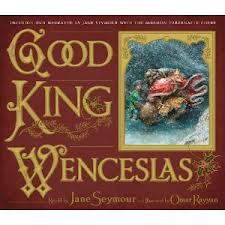
The Legend of Good King Wenceslas
This beautiful version of the legend of Good King Wenceslas was narrated by actress Jane Seymour at the Christmas Concert of the Mormon Tabernacle Choir in 2011:
The castle was brim with the blessings of Christmas - not just because festive music rang through the corridors and pine boughs trimmed every beam. On this St. Stephen's Day the courtiers had gathered their Christmas treasures and given them to the poor.
Now, as the Feast of St. Stephen drew to a close, seventy knights pushed back long wooden tables and offered their hands. Seventy noble women lifted the edges of their gowns and glided to meet them.
Bathed in the glow of a well-fed fire, King Wenceslas looked out upon his court and at the signal of his benevolent smile, their Christmas revelry began.
With a nod to his page, King Wenceslas slipped behind the throne and into the darkness of his private chamber. The page boy was hungry and weary from waiting. "Now can we eat?" he complained, sliding to the floor.
"In time," the king answered, turning away. The king had cared for the boy since his childhood, and soon the boy would be a man. With a wave of sadness, he realized that the blessings of Christmas had already come to his courtiers, but not yet to his loyal page. Was it too late? he wondered.
From a tall, narrow window, King Wenceslas watched the sun hang on crimson clouds and die away. He studied the hedge-bound fields and rolling hills, now swallowed up in snow. His eyes narrowed. There against a row of spidery trees, was a dark speck - a man, perhaps, stooping and searching for wood to warm his family.
Good King Wenceslas looked out
On the feast of Stephen
When the snow lay round about
Deep and crisp and even
Brightly shone the moon that night
Though the frost was cruel
When a poor man came in sight
Gath'ring winter fuel
"Come quickly, lad!" he called. As the boy struggled to his feet, King Wencelsas seized his hand and dashed up narrow steps to a turret balcony. "Look! Do you see him?' The king pointed breathlessly.
For a moment, the page boy could not speak. Rarely had he seen the world in quite this way - asleep under a coverlet of white, glistening under a full moon. He would have fallen asleep himself but for the wonder that was waking within him.
When the dark figure moved again, the king guided the boy's gaze. "There in the trees! Do you see him now?"
"Yes, yes," the boy answered.
"And?" pressed the king. "Is he one of the household? Is he one of us?"
"Oh, no, sire," said the boy. "None of us would be out there, what with the freezing cold and heaven only knows what creatures might be lurking!"
"Hither, page, and stand by me
If thou know'st it, telling
Yonder peasant, who is he?
Where and what his dwelling?"
"Sire, he lives a good league hence
Underneath the mountain
Right against the forest fence
By Saint Agnes' fountain."
King Wenceslas took comfort that the boy knew the people of the kingdom - even those who lived far from the castle. And he rejoiced that the humble peasant, foraging in the snow, could very well be the boy's salvation.
As before, the king snatched the boy's hand and led him down a winding staircase. "Down, down is the way," the king mused as they hurried along.
In the royal pantry, he tossed the page a satchel and ordered him to fill it. As they worked, the page noticed the king's eyes were wet, though his speaking was giddy, like laughter. "Hurry, my boy! Hurry!"
"Bring me flesh and bring me wine
Bring me pine logs hither
Thou and I will see him dine
When we bear him thither."
Page and monarch forth they went
Forth they went together
Through the rude wind's wild lament
And the bitter weather
Soon the king and his page boy were following the peasant's tracks. King Wenceslas carried a cord of split logs across his strong shoulders, wrapped tightly to keep them dry, and in each hand he clutched a heavy cloth sack. Behind him, the page boy bravely struggled under the weight of his own satchel.
The boy wondered if he ought to watch for creatures lurking in the shadows, but in his heart he knew there were none. Indeed, looking into the infinite expanse above, he saw snowflakes descending like concourses of angels, winging their way down to watch over him and lead him safely along.
As the sky cleared, the night air grew colder. The soft blanket of snow that had first enticed the boy now threatened to ensnare him. With every step, its icy surface broke into shards, trapping the boy's feet and turning them to ice. When the boy could no longer feel his toes, he pled with the king for rest and relief.
"Sire, the night is darker now
And the wind blows stronger
Fails my heart, I know not how,
I can go no longer."
King Wenceslas answered tenderly, as one walking the same path himself.
"Mark my footsteps, my good page
Tread thou in them boldly
Thou shalt find the winter's rage
Freeze thy blood less coldly."
It was a strange invitation - to walk in the king's footsteps. At first the boy struggled to do it. But as before, Wenceslas took his hand and helped him find the path. Soon the boy was marching boldly behind his master. Miraculously, with each step, his frozen feet began to warm, and the warmth rose within him and gave him strength.
In his master's steps he trod
Where the snow lay dinted
Heat was in the very sod
Which the Saint had printed
At the edge of the dark forest, a little cottage came into view, its golden light sparkling on the surface of an icebound spring. With a single knock, the king and his page boy were welcomed into the circle of a large and happy family. As guests in the house, they were invited to rest, but the boy would not be still. With the children as his helpers, he fed the fire and set out the unexpected meal. When all had feasted to fatness, they pushed the little table back and began to sing and dance.
From the corner of the cottage, good King Wenceslas watched the boy dance, and smiled to himself. The boy was taking the hands of the children and leading each one, just as he had been led. Their sweet, innocent laughter was the music of Christmas, filling the room and ringing through the forest.
In time, the king and his page boy reluctantly left the warm cottage and ventured once more across the snowy fields. Side by side they strode, now heedless of the cold night air. And the king knew that it was not too late. Now the blessings of Christmas had come to all of his kingdom, because they had come to the boy.
Therefore, Christian men, be sure
Wealth or rank possessing
Ye who now will bless the poor
Shall yourselves find blessing
12/17/12
The Christmas Orange by Laura Martin-Buhler
 Sometimes it is easy to forget the true meaning of Christmas. The busy traditions of the season and the appealing advertisements for material goods can leave the pure and simple truths far, far behind.
Jake was nine years old with tousled brown hair with blue eyes as bright as a heavenly angel. For as long as Jake could remember he had lived within the walls of a poor orphanage. He was just one of ten children supported by what meager contributions the orphan home could obtain in a continuous struggle seeking donations from townsfolk.
There was very little to eat, but at Christmas time there always seemed to be a little more than usual to eat, the orphanage seemed a little warmer, and it was time for a little holiday enjoyment. But more than this, there was the Christmas orange!
Christmas was the only time of year that such a rare treat was provided and it was treasured by each child like no other food admiring it, feeling it, prizing it and slowly enjoying each juicy section. Truly, it was the light of each orphan's Christmas and their best gift of the season. How joyful would be the moment when Jake received his orange!
Unknown to him, Jake had somehow managed to track a small amount of mud on his shoes through the front door of the orphanage, muddying the new carpet. He hadn't even noticed. Now it was too late and there was nothing he could do to avoid punishment. The punishment was swift and unrelenting. Jake would not be allowed his Christmas orange! It was the only gift he would receive from the harsh world he lived in, yet after a year of waiting for his Christmas orange, is was to be denied him.
Tearfully, Jake pleaded that he be forgiven and promised never to track mud into the orphanage again, but to no avail. He felt hopeless and totally rejected. Jake cried into his pillow all that night and spent Christmas Day feeling empty and alone. He felt that the other children didn't want to be with a boy who had been punished with such a cruel punishment. Perhaps they feared he would ruin their only day of happiness.
Maybe, he reasoned, the gulf between him and his friends existed because they feared he would ask for a little of their oranges. Jake spent the day upstairs, alone, in the unheated dormitory. Huddled under his only blanket, he read about a family marooned on an island. Jake wouldn't mind spending the rest of his life on an isolated island, if he could only have a real family that cared about him.
Bedtime came, and worst of all, Jake couldn't sleep. How could he say his prayers? How could there be a God in Heaven that would allow a little soul such as his, to suffer so much all by himself? Silently, he sobbed for the future of mankind that God might end the suffering in the world, both for himself and all others like him.
As he climbed back into bed from the cold, hard floor, a soft hand touched Jake's shoulder, startling him momentarily and an object was silently placed in his hands. The giver disappeared into the darkness, leaving Jake with what, he did not immediately know!
Looking closely at it in the dim light, he saw that it looked like an orange! Not a regular orange, smooth and shiny, but a special orange, very special. Inside a patched together peal were the segments of nine other oranges, making one whole orange for Jake! The nine other children in the orphanage had each donated one segment of their own precious oranges to make a whole orange as a gift for Jake.
Sharing what we truly value is the true spirit of Christmas. Our Heavenly Father gave us His beloved Son. May we, like the children in the orphanage, find ways to share His love with others less blessed.
Subscribe to:
Posts (Atom)